
Speaker Lineup with Talk Titles and Abstracts

Risto Miikkulainen
Professor of Computer Science at the University of Texas at Austin and VP of AI Research at the Cognizant AI Lab
Discovering Decision Strategies through Evolutionary and Multiagent AI
Keynote
This talk will review two recent advances in building decision systems. First, through surrogate world models, it is possible to search for effective decision strategies, represented by neural networks or rule sets, with population-based evolutionary AI, often with surprisingly effective results. Second, through orchestration of multiple LLM agents, it is possible to establish dynamic and continual decision-making incorporating multiple domains of expertise. Recent enhancements for such systems include estimating confidence and maintaining explainability, and in the future, evaluating possible outcomes through simulations of society. In this manner, agentic AI can form an infrastructure for effective and reliable operations in organizations.

Parimal Kopardekar
Acting Director, NASA Airspace Operations and Safety Program
Future Skies
Featured Talk
This presentation traces the evolution of air traffic management—from its historical foundations to today’s operational landscape—and highlights the emergence of innovative unmanned traffic management (UTM) systems. It explores how UTM is reshaping the broader airspace ecosystem, including novel applications such as aerial wildfire management. The talk concludes with a forward-looking discussion on preparing for increasing operational density, diversity, and complexity, emphasizing the critical role of automation and AI/ML technologies in enabling safe, efficient, and scalable future airspace operations.

Michael Witherell
Executive Advisor and Former Laboratory Director, Lawrence Berkeley National Laboratory and Fermi National Accelerator Laboratory (Fermilab)
Using AI to Accelerate Scientific Discovery for the Nation
Featured Talk
Berkeley Lab is a national laboratory funded by the Department of Energy (DOE) to deliver solutions that advance the nation’s science and improve lives. Our immediate goal is to demonstrate that one can double the productivity and impact of American research and innovation, using the national laboratories as a testbed. To meet this goal we are building with partner national laboratories the Genesis Mission, a unified digital infrastructure that allows scientists to use AI to reason, simulate, and do experiments at unprecedented speed. We are also using AI to improve the effectiveness and efficiency of the operations and facility management that support our research. Finally, I will discuss briefly some of the early efforts to guarantee the integrity and reproducibility of scientific research in the AI era.
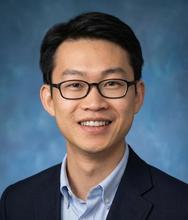
Yu Zhang
Associate Professor in the Department of Electrical and Computer Engineering at the University of California, Santa Cruz
Forecasting Data Center Energy and Cooling Demand in the Era of Foundation Models: Accuracy and Robustness
Lightning Talk
Authors: Caleb Lin, Bingchen Hu, and Yu Zhang
The rapid growth of artificial intelligence and high-performance computing is transforming data centers into increasingly large and dynamic energy consumers, creating new challenges for power system planning, grid operation, and sustainable computing. Accurate forecasting of both electricity consumption and cooling demand is therefore becoming critical for coordinating data center operations with the electric grid and improving overall energy efficiency.
This talk presents a systematic study of data center energy forecasting across three generations of forecasting methods: classical machine learning, deep learning, and emerging time-series foundation models. Using real-world data center measurements, we investigate when large pretrained time-series models offer advantages over conventional models and whether these advantages persist when operational and environmental covariates are available. Particular attention is given to a practical but often overlooked challenge: future covariates used for day-ahead forecasting, such as weather and workload-related variables, are themselves forecasts and therefore inherently uncertain. We examine how different modeling paradigms respond as these future covariates become increasingly noisy and whether incorporating uncertain information can ultimately become less beneficial than forecasting without it.

Harshal Raut
Principal Engineer at Intuit
When Should the AI Call a Human? Proactive Expert Handoff as an Optimal-Stopping Problem
Lightning Talk
As generative AI assistants handle more customer conversations, a recurring design question is when to proactively offer a human expert. Offer too early and a successful self-service interaction is interrupted; offer too late and a frustrated customer may disengage. In a deployed system, this decision is made by a myopic per-turn rule that combines a handoff-propensity score, LLM-derived conversation signals, and expert availability through fixed eligibility thresholds. The rule fires at the first eligible turn, without accounting for the continuation value of waiting.
We formulate proactive handoff as a finite-horizon optimal-stopping problem: at each turn, the system chooses whether to offer now or continue, balancing the immediate value and cost of offering against the value of waiting for another observation or self-resolution. Using the deployed threshold policy as the operational baseline, we specify the sequential state, action, and reward structure and develop an instrumentation and policy-evaluation plan that enables valid offline comparison before guardrailed online testing. The case study surfaces practical obstacles—selective outcomes, intervention-induced censoring, and decision signals that are logged but not retained—that can invalidate naive comparisons. The contribution is a pragmatic path from an LLM-informed heuristic to an evaluable sequential decision policy, with transferable lessons for AI-assisted service systems.

Simrita Singh
Assistant Professor of Information Systems and Analytics, Leavey School of Business at Santa Clara University
Human Fallback Capacity in AI-First Service Systems
Lightning Talk
As generative AI moves from experimentation into customer-service workflows, the metrics used to evaluate AI increasingly shape consequential operational decisions such as human staffing and escalation. Yet AI systems generate contacts, while customers seek resolution of underlying issues. We study how this mismatch affects decision-making in an AI-first service system where unresolved customers may be escalated to humans, return after closure, or exit unresolved. We show that contact-level metrics can make apparently successful AI deployment operationally misleading: repeated contacts dilute measured human delay and reduce required safety staffing; recorded containment can rise even as true resolution falls; and the measurement architecture itself can induce providers to close unresolved contacts rather than escalate them. Moving to verified issue-level measurement restores outcome accountability, but does not fully solve the problem. As AI capability improves, the shrinking population that still requires human service receives progressively less weight in aggregate performance targets, weakening its staffing protection. The results imply a three-part governance design for AI-enabled service systems: link contacts to underlying issues, verify terminal outcomes, and protect human-dependent customers with a dedicated service standard.

Neil Gunther
Researcher at Performance Dynamics
Titan Transients, Inter-Corpora Correlations, and LLM Scalability
Lightning Talk
While benchmarking its ChatGPT LLMs internally, OpenAI researchers noticed that after a significant amount of computational effort on a given size LLM, there was no improvement in Test Loss error reduction. Instead, the loss curve takes on a reverse-S shape or sigmoidal characteristic where the loss eventually remains constant at the foot of the S. To combat this limitation, larger LLM instances—containing decades more neural net connections—were invoked to further reduce the Test Loss. However, that resulted in a sequence of successively lower sigmoidal curves that appear to fall on descending line, which they called the “compute-efficient frontier” (CEF). The CEF bound has raised concerns that it might constitute a universal constraint on the scalability of all LLM systems.
This talk presents a model of LLM computational dynamics, based on the universal scalability law, that provides a framework for understanding the CEF. This talk explains: (1) why all training loss curves have a sigmoidal characteristic; (2) why the observed CEF power law constraint exists; and (3) what CEF inter-corpora correlations means for LLM scalability.

Aditya Puttaparthi Tirumala
Principal Data Scientist at Zillow
Building Trustworthy Marketing Mix Models: AI-Assisted Operations for Enterprise Decision Intelligence
Lightning Talk
Marketing Mix Models (MMMs) have become a primary decision system for allocating marketing investments as privacy-first measurement reduces reliance on user-level attribution. Yet models only create business value when decision-makers trust their recommendations. As markets and media evolve, MMMs must be continuously refreshed in production and operated to remain reliable. Building an MMM is a modeling problem; operating one is a decision intelligence problem.
This talk presents our approach to operating production MMMs through automated model refreshes, AI-assisted operations, and human-in-the-loop decision support. Each refresh produces quantitative evidence describing changes in model performance, marketing efficiency, and model behavior. AI synthesizes this evidence to formulate evidence-informed hypotheses, identify recurring operational patterns, prioritize investigations, recommend next investigation steps, and generate investigation-ready summaries under explicit anti-fabrication guardrails while preserving rigorous quantitative validation.
Using a real production deployment, we demonstrate how AI can strengthen enterprise decision systems without replacing statistical methods. The talk shares practical lessons on where AI meaningfully improves MMM operations, where deterministic methods remain indispensable, and how combining trustworthy model diagnostics with AI-assisted operations provides a practical blueprint for scalable marketing decision intelligence.